
Medically reviewed by Erick R. Kazarian, MD, board-certified orthopedic spine surgeon. Last reviewed February 2026.
Approach
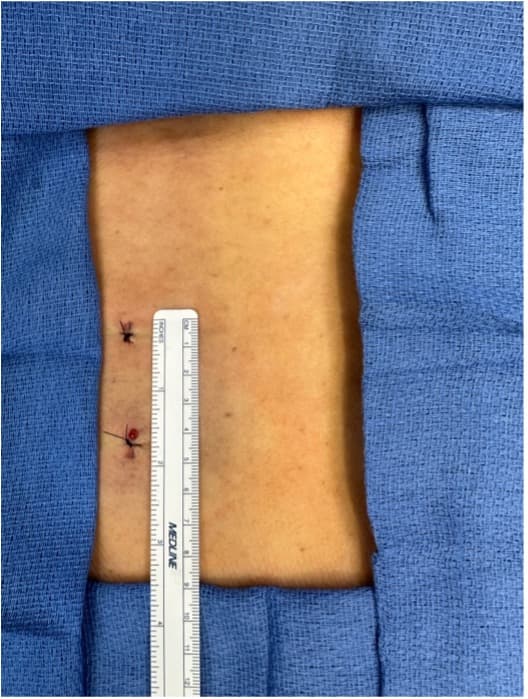
Endoscopic (two ~7–10 mm incisions)
Duration
45 to 90 minutes
Hospital stay
Same-day or next-morning discharge
Overview
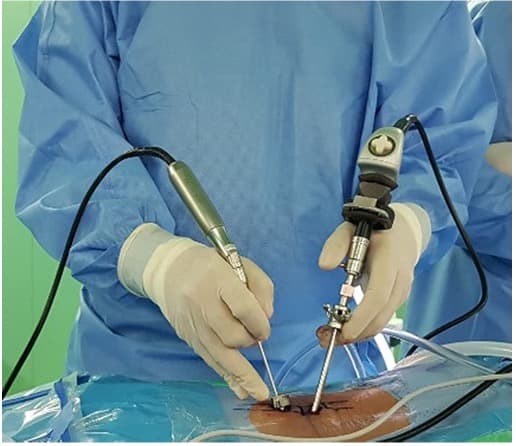
Endoscopic spine surgery is a state-of-the-art minimally invasive technique used to relieve pressure on spinal nerves caused by herniated discs, bone spurs, or spinal stenosis. Unlike traditional open back surgery, it uses two small portals (incisions), one for a high-definition endoscopic camera and one for surgical instruments, to access the problem area in the spine. This two-portal approach gives Dr. Kazarian exceptional visualization and freedom of movement, allowing precise removal of only the tissue that is compressing the nerve while preserving the surrounding healthy structures.
Endoscopic spine surgery is most commonly performed to treat lumbar (lower back) conditions such as herniated or bulging discs that cause sciatica, as well as spinal stenosis that narrows the spinal canal and puts pressure on nerve roots. During a microdiscectomy, the surgeon removes the portion of the disc that is pressing on a nerve. During a laminectomy, a small amount of bone (the lamina) is removed to create more space in the spinal canal. In many cases, both techniques are combined in a single procedure to achieve the best possible outcome for the patient.
The advantages of the endoscopic approach include smaller incisions and minimal muscle damage, better visualization of the surgical field using the high-definition endoscopic camera, less postoperative pain compared to traditional open surgery, faster recovery and earlier return to normal activities, and a lower risk of infection and scarring. The goal of the procedure is to remove the portion of the disc or bone that is pressing on the nerve, relieving pain and restoring mobility. Most patients go home the same day and are able to return to light daily activities within one to two weeks.
Dr. Kazarian performs endoscopic microdiscectomy at NYU Langone Health in New York City and evaluates patients at offices in Midtown East, the Penn District, and Tarrytown, NY.
See the surgery step by step
Interactive walkthrough
Follow the operation one step at a time
Choose a simple illustration, or a 3D model of the neck you can turn with your finger or mouse. Opens full screen.
Simplified illustration for patient education. Bone model derived from a CT scan; discs, nerves and instruments are illustrations.
Who it's for
Patients with sciatica, leg pain, or walking limitation from a lumbar disc herniation, spinal stenosis, or bone spurs that have not responded to non-surgical care.
Why patients choose this approach
- Two incisions, each only ~7–10 mm
- Muscles are gently dilated, not cut
- Many patients feel immediate leg pain relief on waking
- Recovery measured in weeks rather than months
What to expect on surgery day
Endoscopic spine surgery is typically an outpatient procedure, meaning you can expect to go home the same day. Here is an overview of what your experience will be like from arrival through discharge.
- 1
Check-In and Pre-Operative Preparation
When you arrive at the hospital, our team will greet you, confirm your identity and medical information, and review your consent forms. You will change into a hospital gown and have an IV line placed for fluids and medication. Your anesthesiologist will meet with you to discuss your anesthesia plan, and Dr. Kazarian will mark the surgical site and answer any remaining questions you may have.
- 2
Anesthesia and Positioning
You will be brought to the operating room and positioned comfortably on your stomach (prone position) on a specialized surgical table. General anesthesia is most commonly used, so you will be fully asleep and feel no pain throughout the procedure. In select cases, Dr. Kazarian may recommend sedation with local anesthesia. Once you are anesthetized, the surgical team will use fluoroscopic (live X-ray) imaging to precisely locate the affected level of your spine.
- 3
Two-Portal Incisions and Endoscope Insertion
Dr. Kazarian makes two small incisions (portals), each approximately 7 to 10 millimeters, near the affected area of your spine. One portal is used for the high-definition endoscopic camera, and the other is used for the surgical instruments. The muscles are gently dilated apart rather than cut, which greatly reduces tissue damage. This two-portal technique provides Dr. Kazarian with an excellent view of the surgical area and full freedom of instrument movement, allowing greater precision than a single-portal approach.
- 4
Nerve Decompression
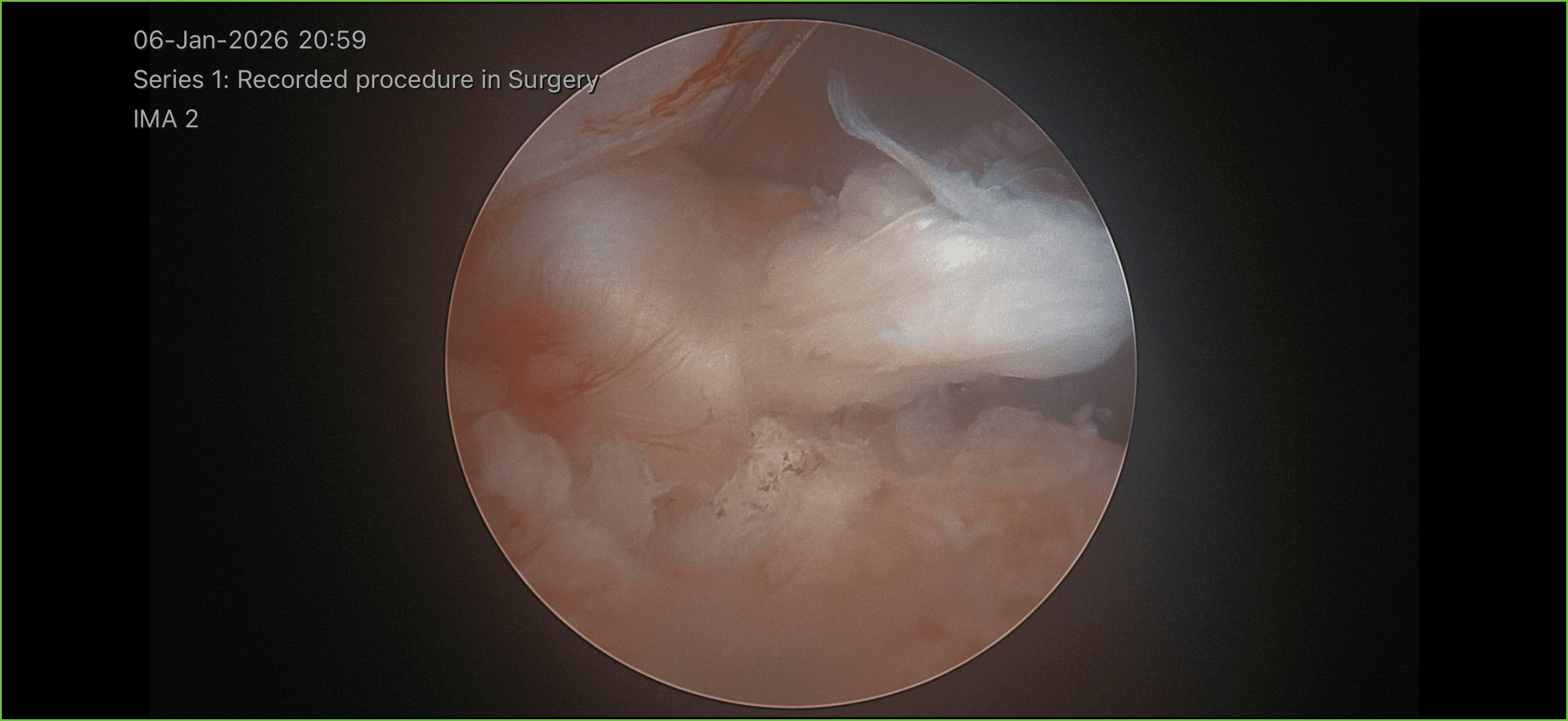
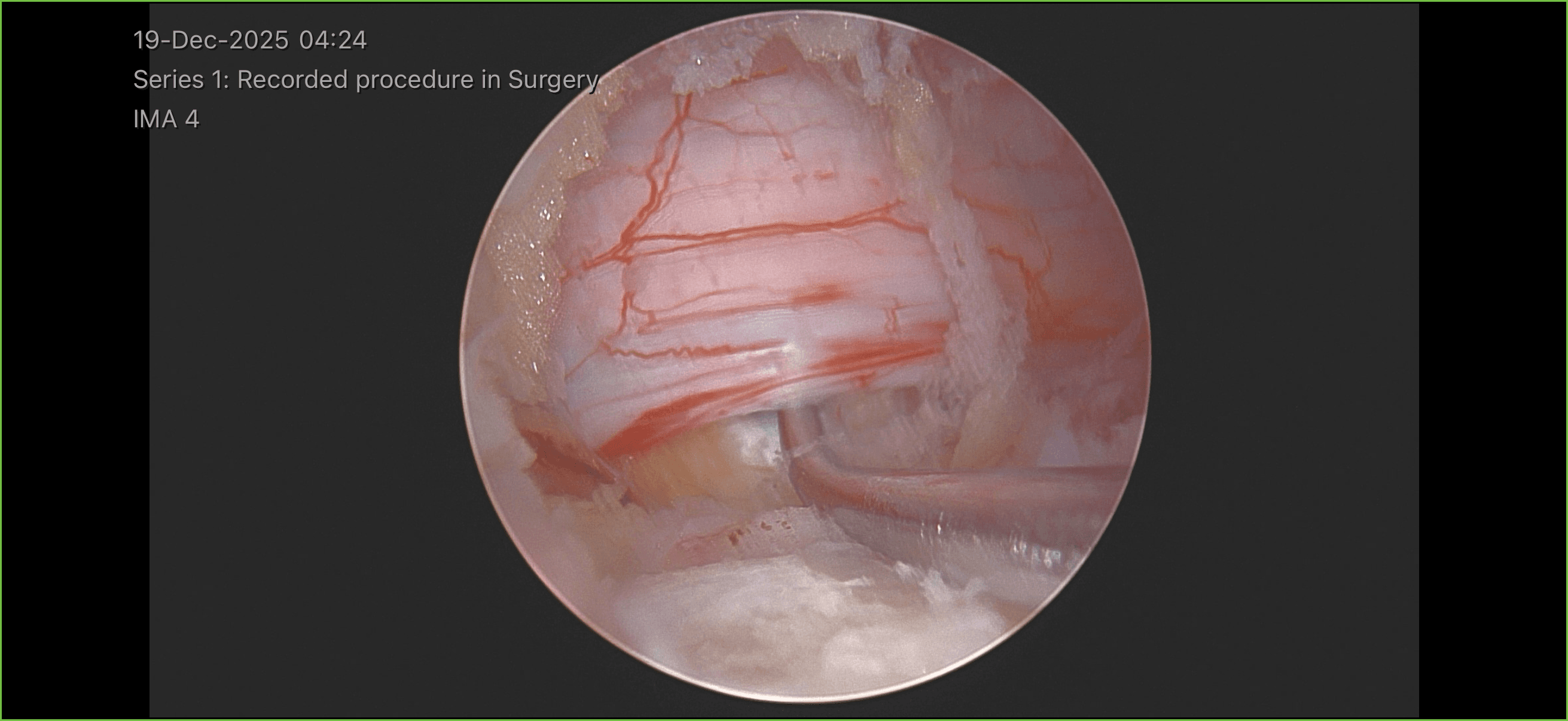
Using specialized micro-instruments through the instrument portal, Dr. Kazarian carefully removes the herniated disc fragment, bone spur, or thickened ligament that is compressing the spinal nerve while viewing the entire procedure through the camera portal. If a laminectomy is needed, a small portion of the lamina bone is precisely removed to widen the spinal canal. The high-definition endoscopic camera provides real-time visualization so Dr. Kazarian can protect the nerve root and surrounding structures with exceptional accuracy. The entire process typically takes 45 to 90 minutes.
- 5
Closure and Recovery Room
Once the nerve is fully decompressed, the endoscope and instruments are removed. The two small incisions are closed with a few stitches or adhesive strips and covered with sterile bandages. You will be taken to the recovery room, where our nursing team will monitor your vital signs, manage any discomfort, and help you begin moving safely. Most patients are able to stand and walk within one to two hours after surgery. Before discharge, your care team will review your pain management plan, activity guidelines, and follow-up appointment schedule with you and your companion.
Preparing for surgery
Careful preparation before your surgery helps ensure the safest possible experience and the best outcome. Please follow these instructions and contact our office if you have any questions.
Review all current medications and supplements with Dr. Kazarian.
1-2 weeks before surgeryStop blood thinners (warfarin, aspirin, Plavix), NSAIDs (ibuprofen, naproxen), and herbal supplements (fish oil, vitamin E, ginkgo) as directed. GLP-1 receptor agonists (Ozempic, Wegovy, Mounjaro, Trulicity, Saxenda) must be stopped 7 days before surgery due to the risk of aspiration under anesthesia. Do not stop any medication without Dr. Kazarian's approval.
Medications
Obtain medical clearance from your primary care physician and any relevant specialists.
2-4 weeks before surgeryThis may include blood work, an EKG, and a health review. Bring clearance letters and your CPAP machine (if applicable) on surgery day.
Other
Do not eat or drink anything after midnight the night before surgery.
After midnight the night before surgeryThis includes water, coffee, gum, and mints. You may take approved medications with a small sip of water.
Eating & drinking
The NYU perioperative team will call you the day before surgery with your arrival time.
Day of surgeryLocation: NYU Langone Kimmel Pavilion, 424 East 34th Street, Manhattan. Bring a valid photo ID, insurance card, and medication list.
Arrival
Arrange for a responsible adult to drive you home and stay with you for 24 hours.
Day of surgeryYou cannot drive after anesthesia. Your driver should stay at the hospital during the procedure.
Transportation
Recovery
Recovery from endoscopic spine surgery is significantly faster than recovery from traditional open spine surgery; most patients measure their recovery in weeks, not months. Because the procedure uses two very small incisions and preserves the surrounding muscles and tissues, postoperative pain is generally mild and manageable. Many patients notice immediate relief of their leg pain (sciatica) upon waking from surgery, though some numbness or tingling may take longer to resolve. Following Dr. Kazarian's activity guidelines and attending all follow-up appointments are key to a smooth and successful recovery.
First Few Days After Surgery
You may go home the same day as your procedure or, in some cases, the following morning. It is normal to experience mild to moderate soreness at the incision site, and some patients notice immediate improvement in their leg pain or sciatica symptoms. You will be encouraged to walk short distances several times a day to promote circulation and healing. Dr. Kazarian will prescribe pain medication and a muscle relaxant if needed.
- No bending, twisting, or lifting anything heavier than 5 pounds
- No driving while taking prescription pain medication
- Avoid sitting for more than 20 to 30 minutes at a time
- You can shower 48 hours after surgery with the incision exposed. Just let the water run over the incision. Do not submerge it underwater.
- Keep the incision clean and dry; no soaking in baths, pools, or hot tubs
- Use a log-rolling technique when getting in and out of bed
Early Recovery
Most patients can gradually increase their walking distance and duration during this period. Incision site soreness should continue to improve. Most patients are off prescription pain medications by the end of the first week and transition to over-the-counter options such as acetaminophen or ibuprofen. Dr. Kazarian will see you for a follow-up visit to check your incision, review your progress, and adjust your activity level. At the two-week visit, patients generally report that they are 70 to 80 percent healed.
- Continue to avoid bending, twisting, and lifting more than 5-10 pounds
- No strenuous exercise, running, or heavy housework
- Avoid prolonged sitting; take breaks to stand and walk every 30 minutes
- No driving until cleared by Dr. Kazarian (typically by week 2)
Gradual Return to Activity
Full activity restrictions remain in place until 6 weeks. Return to activity is typically discussed at the 6-week visit. If the incision is healed and your pain is still gone, you are considered fully recovered from surgery at this point. In some circumstances, post-operative physical therapy will be started, although some patients do not need it. Most patients who work in desk or office settings can return to work during this period, often around weeks 2 to 4.
- Continue full activity restrictions until the 6-week mark
- Avoid high-impact activities such as running, jumping, or contact sports
- Do not increase lifting limits until cleared by Dr. Kazarian at the 6-week visit
- If physical therapy is prescribed, follow your therapist's exercise program closely
- Continue to use proper body mechanics when bending and lifting
Full Recovery and Return to Normal Activities
There is typically no scheduled follow-up after the 6-week visit. This is the range when patients continue to improve their activity level and progress with physical therapy if it was prescribed. By six to twelve weeks, most patients have returned to their full range of activities, including work, exercise, and recreational pursuits. Continued core strengthening and maintaining a healthy weight are important for long-term spine health and reducing the risk of future disc problems.
- Follow Dr. Kazarian's recommendations for returning to heavy lifting or high-impact sports
- Continue your home exercise program for ongoing spine health
- Report any new or recurring symptoms to Dr. Kazarian promptly
Follow-up schedule
- 2 weeks after surgery: Incision check and review of initial recovery progress. Most patients report they are 70 to 80 percent healed at this visit
- 6 weeks after surgery: Return-to-activity discussion, lifting of activity restrictions, and referral to physical therapy if needed. If the incision is healed and your pain is gone, you are considered fully recovered from surgery
- After 6 weeks: No routine follow-up is typically scheduled. Contact the office if new or recurring symptoms develop
When to call us
- New or worsening leg pain, numbness, or weakness after initial improvement
- Signs of infection at the incision site, including increasing redness, warmth, swelling, drainage, or fever above 101.5 degrees Fahrenheit
- Difficulty urinating, loss of bladder or bowel control, or new numbness in the groin or saddle area (seek emergency care immediately)
- Severe or worsening back pain that is not relieved by prescribed medications
- Sudden onset of leg weakness or difficulty walking that was not present before surgery
- Persistent nausea, vomiting, or inability to keep down fluids or medications
- Calf pain, swelling, or redness in one or both legs, which may indicate a blood clot
Specific medication instructions are provided at discharge and reviewed with you before you go home.
Risks
Endoscopic spine surgery is a minimally invasive procedure with a strong safety profile. However, as with any surgery, there are potential risks and complications that you should be aware of. Dr. Kazarian will discuss these with you in detail during your consultation.
Infection
Any time an incision is made, there is a small risk of infection at the surgical site. Because the two portal incisions used in endoscopic spine surgery are very small, the risk of infection is lower than with traditional open surgery. Signs of infection include increasing redness, swelling, warmth, or drainage from either incision, as well as fever.
Blood Loss
Some bleeding is expected during any surgery. Due to the minimally invasive nature of this procedure, blood loss is typically minimal. Significant blood loss requiring a transfusion is very rare.
Cerebrospinal Fluid (CSF) Leak
The spinal cord and nerves are surrounded by a protective membrane that contains cerebrospinal fluid. In rare cases, this membrane can be nicked during surgery, causing a fluid leak. If this occurs, it is typically repaired during the procedure and may require a short period of additional bed rest to allow it to heal.
Recurrent Disc Herniation
After a microdiscectomy, there is a chance that the same disc can herniate again in the future. This occurs in a small percentage of patients and may happen weeks, months, or even years after the original surgery. If a recurrent herniation causes significant symptoms, additional treatment or surgery may be needed.
Incomplete Resolution of Symptoms
While most patients experience significant relief from leg pain and sciatica after surgery, there is a possibility that some of your pre-operative symptoms may not fully resolve. This can happen if the nerve was compressed for an extended period before surgery or if there are other contributing factors to your pain. Dr. Kazarian will discuss realistic expectations with you based on your specific condition.
Neurologic Injury
Although uncommon, there is a risk of injury to the spinal nerves during surgery. This could result in new or worsened numbness, tingling, or weakness in one or both feet or legs. Dr. Kazarian uses magnification, specialized instruments, and careful technique to minimize this risk.
Common questions
How is endoscopic spine surgery different from traditional open back surgery?
Endoscopic spine surgery is a minimally invasive approach that uses two small portals (one for a camera and one for instruments) compared to the larger incision required in traditional open surgery. Dr. Kazarian views the surgical area through a high-definition endoscopic camera rather than opening the back with a wide incision. Because the muscles are gently dilated apart rather than cut, patients generally experience less pain, less blood loss, less scarring, and a significantly faster recovery. The two-portal technique also provides better visualization and instrument maneuverability compared to single-portal approaches. Open surgery may still be recommended in certain complex cases, and Dr. Kazarian will discuss the best approach for your specific condition.
How long does the surgery take?
Endoscopic spine surgery typically takes between 45 and 90 minutes, depending on the complexity of your condition and whether additional decompression such as a laminectomy is needed. You should plan to be at the hospital for approximately four to six hours total, which includes check-in, pre-operative preparation, the procedure itself, and time in the recovery room before you are discharged.
Will I be able to go home the same day as surgery?
Yes, the majority of patients who undergo endoscopic spine surgery are able to go home the same day. Because the procedure is minimally invasive, most patients are walking within one to two hours after surgery and can be safely discharged once they are comfortable, able to walk, and their pain is well controlled. In rare cases, an overnight stay may be recommended for monitoring. You will need a responsible adult to drive you home and stay with you for the first 24 hours.
How much pain will I have after surgery?
Most patients report that postoperative pain from the incision site is mild to moderate and very manageable. Dr. Kazarian will send you home with the following medications as needed: • Tylenol (acetaminophen) 500–1000 mg every 6 hours for mild pain • Flexeril (cyclobenzaprine) 5 mg every 6 hours for muscle spasms or soreness • Tramadol 75 mg every 6 hours for moderate to severe pain not controlled by Tylenol alone Many patients are pleasantly surprised by how little pain they experience and are able to transition to just over-the-counter Tylenol or ibuprofen within the first week. Importantly, the leg pain or sciatica that brought you to surgery often improves immediately or within the first few days. Some residual numbness or tingling in the leg may take several weeks to fully resolve as the nerve heals.
How long is the recovery period?
Recovery from endoscopic spine surgery is considerably faster than from traditional open spine surgery. Most patients are able to care for themselves immediately after surgery, including everyday activities such as cooking, cleaning, bathing, and walking. However, unrestricted activity (including heavy lifting, exercise, and sports) requires approximately six weeks to allow the wound to fully heal and minimize the risk of a reherniation. For return to work, patients with office or work-from-home jobs can typically go back as soon as they feel comfortable, usually around one week after surgery. Patients with more physically demanding or manual labor jobs should plan on approximately six weeks before returning to full duties.
What are the risks and potential complications of this surgery?
Endoscopic spine surgery is considered a safe and well-established procedure, but like all surgeries, it carries some risks. Potential complications include infection, bleeding, nerve injury, spinal fluid leak (dural tear), and recurrence of the disc herniation. The minimally invasive technique is associated with lower overall complication rates compared to traditional open surgery. Serious complications are rare. Dr. Kazarian will discuss the specific risks and benefits as they apply to your individual case during your pre-operative consultation.
Will this surgery relieve my sciatica or leg pain?
Endoscopic spine surgery has a high success rate for relieving sciatica caused by a herniated disc pressing on a spinal nerve. Studies show that approximately 85 to 95 percent of patients experience significant or complete relief of their leg pain after the procedure. Many patients notice an improvement in their leg symptoms immediately after surgery. However, numbness, tingling, or mild weakness that was present before surgery may take longer to resolve, sometimes several weeks to months, as the nerve gradually heals. Dr. Kazarian will discuss realistic expectations based on your specific condition.
Will I need physical therapy after surgery?
While some patients may benefit from physical therapy after endoscopic spine surgery, most do not feel the need for it due to the minimally invasive nature of the procedure and the quick recovery. The decision about whether physical therapy is appropriate for you will be made at your six-week follow-up appointment, when Dr. Kazarian can assess your progress and determine if additional rehabilitation would be helpful. If recommended, physical therapy typically focuses on core muscle strengthening, improving flexibility, and teaching proper body mechanics to protect your spine during daily activities.
When can I drive again after surgery?
Most patients are cleared to drive within one to two weeks after surgery, provided they are no longer taking prescription opioid pain medications and can comfortably perform the motions required for safe driving, such as turning to check mirrors and pressing the brake pedal quickly. Dr. Kazarian will evaluate your readiness at your first follow-up appointment. Driving while taking narcotic pain medication is unsafe and not permitted. If you had surgery on your right side and drive an automatic transmission, you may need to wait until you can press the brake pedal firmly and without hesitation.
When can I go back to work?
Your return-to-work timeline depends on the physical demands of your job. Patients with office or work-from-home jobs can typically return as soon as they feel comfortable, usually around one week after surgery. Patients with more physically demanding or manual labor jobs should plan on approximately six weeks before returning to full duties. This six-week timeline allows the surgical wound to fully heal and minimizes the risk of a reherniation. Dr. Kazarian will confirm your readiness to return at your follow-up appointments.
Does this procedure remove any bone?
Yes, in many cases bone may be removed during endoscopic spine surgery. During the surgery, Dr. Kazarian may perform a laminectomy where a small portion of the lamina bone is precisely removed to widen the spinal canal if needed to relieve pressure on the spinal nerves. This is often combined with disc removal in a single procedure to achieve the best outcome for the patient. The amount of bone removed is minimal and precisely targeted to decompress the nerve while preserving the surrounding healthy structures.
Does the entire disc get removed?
No, the entire disc is not removed during endoscopic spine surgery. Dr. Kazarian only removes the portion of the disc that is pressing on the nerve - specifically the herniated or bulging fragment that is causing your symptoms. The goal is to relieve pressure on the spinal nerve while preserving as much of the healthy disc tissue as possible. This selective removal helps maintain the disc's function as a cushion between your vertebrae while eliminating the source of your pain. This targeted approach is one of the advantages of the minimally invasive technique - it allows Dr. Kazarian to precisely remove only the problematic tissue while protecting the surrounding healthy structures.
What is Dr. Kazarian's training and background?
Dr. Kazarian completed his undergraduate education at Princeton University and earned his medical degree from the University of Michigan Medical School. He completed his orthopaedic surgery residency at Harvard Medical School and Massachusetts General Hospital, followed by a fellowship in spine surgery at the Mayo Clinic.
Conditions treated
Lumbar Disc Herniation
A lumbar disc herniation occurs when a disc in the lower back pushes through its outer ring and presses on a spinal nerve, most often producing leg pain (sciatica), numbness, or weakness.
Sciatica
Sciatica is leg pain caused by irritation or compression of a lumbar nerve root, most often from a herniated disc or spinal stenosis. It is a symptom, not a diagnosis, and the underlying cause guides treatment.
Spinal Stenosis
Spinal stenosis is a narrowing of the spinal canal that compresses the spinal cord or nerve roots, producing leg pain, walking limitation, and, in cervical cases, hand and balance problems.
Cervical Radiculopathy
Cervical radiculopathy, a 'pinched nerve' in the neck, produces pain, numbness, or weakness that radiates from the neck into the shoulder, arm, or hand along the path of the affected nerve.
Cervical Disc Herniation
A cervical disc herniation occurs when a disc in the neck pushes through its outer ring and presses on a spinal nerve, producing neck pain plus radiating symptoms into the shoulder, arm, or hand.

Take this guide with you
Scan with your phone's camera to open this page anytime, or share it with family helping you through surgery and recovery.
This page is for general education and is not medical advice. Whether this procedure is right for you depends on your anatomy, imaging, and goals, and is decided together at an in-person consultation.